Showing posts with label Wat Makham. Show all posts

Monday, July 27, 2026

Revisited Wat San Chao & Wat Makham : A Blessed Journey to Ah Pek Rong See Shrine, Ben Tao Gong & Sacred Temples Amulet - Pathum Thani - Thailand.

Today, I had the opportunity to visit Wat San Chao and Wat Makham, two beautiful temples located side by side in Pathum Thani, Thailand. These temples are well known for their peaceful atmosphere and their connection to the revered Chinese-Thai spiritual master, AhPek Rong See.

From the moment I arrived, I felt a sense of calm and positivity. Surrounded by beautiful temple grounds and devoted worshippers, I couldn't help but feel truly blessed and grateful. It was more than just a temple visit—it was a meaningful experience that filled my heart with peace and hope.

In this blog, I'd like to share my journey, the history behind these sacred places, and the unforgettable experience of visiting one of Thailand's most respected spiritual destinations.

One of the highlights of Wat Makham is its beautiful old-style ubosot (ordination hall), which reflects the elegance of traditional Thai temple architecture. Although modest in size, the ubosot has a timeless charm, with its weathered walls, classic multi-tiered roof, and intricate decorative details that tell the story of its long history. Walking around the ubosot, I could feel a sense of peace and reverence. The aged structure, surrounded by ancient trees and the quiet temple grounds, creates a serene atmosphere that invites visitors to slow down, reflect, and appreciate the beauty of Thailand's cultural and spiritual heritage. Standing before this historic building, I felt truly blessed to witness a place that has welcomed generations of devotees seeking faith, hope, and inner peace.

A visit to Wat Makham would not be complete without stopping at the shrine dedicated to Ah Pek Rong See. The shrine enshrines a statue of the revered Chinese-Thai spiritual master, where countless devotees come to pay their respects and offer prayers. Many visitors seek blessings for prosperity, career success, good health, and protection, while others return to express gratitude after their wishes have been fulfilled. Whether you come with a special prayer or simply to experience the peaceful atmosphere, this sacred shrine is truly a must-visit and the spiritual heart of the temple complex.
Ah Pek Rong See – The Legendary Chinese-Thai Spiritual Master of Pathum Thani

Among Thailand's most respected Chinese spiritual figures, AhPek Rong See (เซียนแปะโรงสี) remains one of the most revered names. Also known as Ajarn Ngoh Kim Gui, he is remembered not only for his knowledge of Chinese metaphysics and Feng Shui but also for his generosity, wisdom, and dedication to helping others. The nickname "Ah Pek Rong See" literally means "Grandpa of the Rice Mill." The name comes from his successful career as a rice mill owner in Pathum Thani, where local people affectionately called him "Ah Pek," a respectful Chinese term for an elderly uncle or grandfather.

Born in China around the late 19th century, Ah Pek Rong See moved to Thailand with his family when he was still a young boy. As he grew older, he built a successful business, eventually becoming a respected rice merchant and rice mill owner. Despite his success, he was widely known for his humility and generosity. He frequently donated rice, supported local communities, and contributed to the construction and restoration of temples. Beyond his business achievements, Ah Pek Rong See became famous for his deep understanding of Feng Shui, Chinese astrology, and traditional Chinese metaphysics. Many people sought his advice on choosing auspicious locations for homes and businesses, improving family harmony, and making important life decisions. His reputation spread throughout Thailand, attracting visitors from all walks of life who hoped to receive his guidance and blessings.

Although he was not a Buddhist monk, Ah Pek Rong See maintained a close relationship with Wat San Chao in Pathum Thani, where he regularly welcomed visitors and offered spiritual advice. His wisdom, kindness, and willingness to help others earned him great respect among both Thai and Chinese communities. After his passing in 1984, his legacy continued to grow. Today, the shrine dedicated to Ah Pek Rong See at Wat San Chao has become one of Thailand's most popular spiritual destinations. Thousands of devotees visit every year to pay their respects and pray for prosperity, career success, business growth, good fortune, and protection. Many visitors also bring offerings as a sign of gratitude after their wishes are believed to have been fulfilled. Whether viewed as a respected spiritual teacher, a Feng Shui master, or a symbol of compassion and generosity, Ah Pek Rong See continues to inspire countless people. His life reminds us that true prosperity comes not only from material success but also from kindness, wisdom, and a genuine desire to help others.

After paying my respects and offering my prayers, I took a photo with the golden statue of Ah Pek Rong See as a meaningful keepsake of this special visit. Standing before the revered master, I felt a deep sense of peace, gratitude, and blessing. It was a memorable moment that I will always cherish, reminding me of the faith, hope, and positive energy I experienced at this sacred place.
One of the first things that caught my attention at Wat San Chao was its impressive temple arch. Beautifully designed with traditional Thai-Chinese architectural elements, the arch stands as a welcoming gateway for visitors entering this sacred place.
The shrine is beautifully decorated with traditional Chinese architecture, red lanterns, and intricate carvings, creating a serene and sacred atmosphere. As I offered incense and prayers, I felt a deep sense of peace and gratitude. Whether you are seeking blessings, protection, or simply wish to experience the rich heritage of Thai-Chinese culture, paying respects to Ben TouGong at Wat San Chao is a meaningful part of the visit.
A memorable photo with the revered AhPek Rong See at the shrine in Wat San Chao after paying my respects. Standing before his statue, I felt a sense of peace, gratitude, and blessing. May his wisdom continue to inspire and guide everyone who visits this sacred place.
The main pavilion of Wat San Chao is the spiritual center of the temple, where devotees gather to offer prayers and seek blessings. Beautifully decorated with traditional Chinese architectural elements, the pavilion features vibrant red pillars, intricate carvings, and ornate roof details that reflect the rich heritage of the Thai-Chinese community. The peaceful atmosphere inside invites visitors to pause, pray, and appreciate the temple's long-standing traditions.

Standing proudly in front of the pavilion are the magnificent dragon pillars, one of the temple's most eye-catching features. The dragons, intricately carved as they spiral around the towering columns, symbolize strength, wisdom, prosperity, and protection in Chinese culture. Their exquisite craftsmanship makes them a popular spot for photography, while also reminding visitors of the temple's deep cultural and spiritual significance. Whether you come to admire the architecture or to seek blessings, the main pavilion and its majestic dragon pillars are highlights that should not be missed.

A photo taken in front of the main pavilion of Wat San Chao, where the sacred statue of Ben Tao Gong (本头公) is enshrined. Standing before this revered shrine, I paid my respects and offered my prayers, feeling a deep sense of peace, gratitude, and blessing. The beautiful pavilion, with its traditional Chinese design and spiritual atmosphere, made this visit a truly meaningful and memorable experience.
At the heart of Wat San Chao stands the sacred shrine dedicated to Ben Tou Gong (本头公), the principal deity worshipped by the local Thai-Chinese community. Ben Tou Gong is revered as the guardian deity of the land and community, believed to watch over the people, protect their homes and businesses, and bless devotees with peace, prosperity, and good fortune. The worship of Ben Tou Gong has been an important tradition among Teochew Chinese communities in Thailand for generations.
One of the most interesting sights at Wat San Chao is the collection of crocodile statues displayed around the shrine area. For many visitors, these crocodiles are not simply decorations but carry a deeper cultural and spiritual meaning. In Thai and Chinese folk beliefs, crocodiles are often associated with strength, protection, power, and the ability to overcome obstacles. Their presence at the shrine represents guardianship and is believed by devotees to help protect the sacred place and those who come to pay their respects.

The crocodile statues are also connected with local traditions and stories surrounding the temple area, which has a long relationship with the waterways of Pathum Thani. As a riverside community, water creatures such as crocodiles have become part of the local identity and spiritual symbolism. Walking around the shrine and seeing these unique crocodile figures adds another fascinating layer to the visit. They reflect the blending of Thai local beliefs and Chinese spiritual traditions that make Wat San Chao a special and memorable destination.

A simple and peaceful altar dedicated to Bodhisattva Guan Yin (观音菩萨), the revered figure of compassion and mercy in Chinese Buddhist tradition. The calm presence of Guan Yin creates a soothing atmosphere, reminding devotees of kindness, patience, and the importance of helping others. Although the altar is modest in design, it carries a deep sense of devotion and serenity. Standing before Guan Yin, I felt a moment of peace and gratitude, appreciating the beauty of faith and the spiritual traditions preserved at Wat San Chao. One unique feature of the Guan Yin altar is the many bead necklaces placed as offerings before the statue. These prayer beads, known as Buddhist mala (念珠 / 佛珠), represent devotion, respect, and the prayers of devotees who come to seek Guan Yin's compassion and blessings.

The amulet counter at Wat San Chao is a fascinating place for devotees and collectors, offering a variety of sacred items connected to the temple's spiritual heritage. Among the most treasured amulets are those featuring AhPek Rong See, the respected Chinese-Thai spiritual master whose blessings continue to inspire many visitors.
After obtaining the Ah Pek Rong See amulet at Wat San Chao, I took some time to explore the temple grounds before walking over to the nearby Wat Makham. As I wandered through this peaceful and historic area, I discovered another meaningful part of the temple surroundings—the crematorium and the old chedi, which quietly reflect the deep traditions, history, and spiritual heritage of Thai Buddhism. After this meaningful visit, I continued my journey onward to explore another temple, carrying with me the peaceful memories and blessings from Wat San Chao and Wat Makham.

 .

See more AhPek Rong See amulets at: 

👉 https://thaiamulets-dhammapath.blogspot.com/search/label/AhPek%20Rong%20See%20%28Grandpa%20Kimkoey%29?m=0

.

See more Thai amulets at:

👉 http://www.thaiamulets-dhammapath.blogspot.com/?m=0

Sunday, March 3, 2024

Revisited BE2567 ~ Wat San Chao (Part:2/2) Shrine Of 本头公 - Pathum Thani - Thailand (Part:2/2).

This year i came back to visited and pray to Shrine 本头公 and didn't forget to rubbed th Foo Dog for more money luck. When you have chance come to visit, remember to rub the Foo Dog for 9 times for all 4 Foo Dog statues.
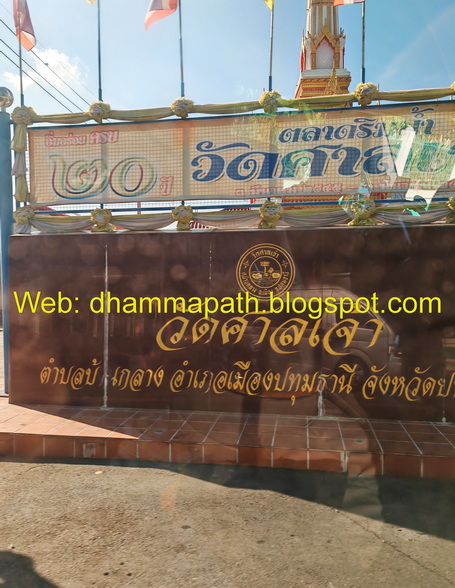
Signboard of Wat San Chao at front temple entrance.
Shrine 本头公 still in construction for adding on decoration in the shrine compound area. The 'new' Shrine gate with 2 Dragons is magnificently beautiful.

Many banner for new batch amulets of AhPek Rongsee.
Photo taken at front Shrine 本头公, with ongoing work for Dragon Pillar, Roof and new altar.
Inside the shrine 本头公 with it counter for amulets. Here i obtained my Holy items.
Photo taken with statue 本头公, with many Holy items for blessing at center altar.
The 4 side of Foo Dog located at front entrance. Remember to rub it 9 times for each.
The sacred Foo Dog statue with offering banknotes.
Ah Pek Rong See ~ Grandpa Kimkoey. He is a Chinese old man who settled in Thailand and he was usually went to the Chinese shrine at Wat San Chao in Pathum Thani Province. He was a owner of a rice mill and local people called him "AhPek Rong See".  He is well known by his Wicha and Feng Shui teaching and like to help people and teach them to do good things. People often asked him for a favor about Feng Shui of their houses, establishments and their ancestors' graves and most of them were later prosperous in business.
Another 'new' Shrine gate facing the Chao Phraya river.
The sacred Pillar Dragon and ancillary smaller buildings.
The way to jetty Chao Phraya river.
Come here for feeding fishes before continue my temple journey. You can buy fish feeds at the market, next to the jetty.
 .
See more AhPek Rong See amulets at: 
.
See more Thai amulets at:

Thursday, February 29, 2024

Revisited BE2567 ~ Wat Makham (Part:1/2) Shrine Of Grandpa KimKoey @ AhPek RongSee - Pathum Thani - Thailand (Part:1/2).

This year BE2567, i went to revisited Wat Makham & Wat San Chao to pay respect to Grandpa KimKoey @ AhPek RongSee and also pray to 本头公 (Běn tóu gōng). Here we see the ancient temple of Wat Makham. Wat Makham was built around 1627 during the Ayutthaya period by the Mon people who immigrated to this place. They assumed this temple name 'Wat Makham' came from because of many tamarind trees and some said name originally came from the city of Mon people. In the past, temple diveded to Wat Makham Nok and Wat Makham Nai. Later, during the reign of Phrakru Thumsartham (Wong), they were merged into a single temple and the name was cut out to become "Wat Makham" since 1939.
Packed surrounding and many vendors selling offering items next to the Shrine area. Opposite the Shrine also located market selling many delicious foods, traditional boat noodles, fruits and many merchandises. Saturday and Sunday will be superb crowded by people here.
The main entrance of 锦溪堂 Sala Nathi Thongsiri ~ Shrine of Grandpa Kimkoey @ AhPek Rongsee.

Photo taken at front side of the Shrine锦溪堂 and walked in to pay respect to Grandpa KimKoey @ AhPek RongSee. The offering items you can buy outside or inside the shrine.

The sacred Golden statue of Grandpa Kimkoey @ AhPek RongSee. Ah Pek Rong See ~ Grandpa Kimkoey. He is a Chinese old man who settled in Thailand and he was usually went to the Chinese shrine at Wat San Chao (next to Wat Makham) in Pathum Thani Province. He was a owner of a rice mill and local people called him "AhPek Rong See".  He is well known by his Wicha and Feng Shui teaching and like to help people and teach them to do good things. People often asked him for a favor about Feng Shui of their houses, establishments and their ancestors' graves and most of them were later prosperous in business.
Photos of inside the Shrine surrounding with hang many TangLung as decoration.
Last photo took before heading to next side of Wat San Chao ~ Shrine 本头公 (Běn tóu gōng), riverside of Chao Phraya river.
Wat Makham, the old Bell Tower and Pillar with more buildings of Wiharn and Sala.
The old style building Ubosot of Wat Makham.
Inside the Ubosot with simple main altar and venerated Golden Phra Buddha statues.
The temple amulets counter and monks giving blessing place.
The small wiharn with ancient sacred Reclining Buddha statue.
Wat Makham crematorium and temple surrounding area.
 .
See more AhPek Rong See amulets at: 
.
See more Thai amulets at: